 Tree Leaf Identifier
How to Identify a Tree from a Leaf Photo
How do you identify a tree by its leaves?
First check whether you have one simple leaf or a compound leaf made of several leaflets. Compare its shape and edge, then check whether leaves attach opposite or alternate on the twig. Use bark, fruit, and location to test your first match.
References: NC State Extension: tree identification · University of Florida IFAS: How to Identify a Tree.
Start with a clear photo of the whole leaf, including its edge and stem. Compare its shape, lobes, veins, and arrangement, then use the twig, bark, buds, fruit, and location to check your match.
Leaf shape
Is the leaf oval, heart-shaped, triangular, needle-like, or divided into leaflets? Start broad, then compare finer details.
Leaf margins and lobes
A smooth margin differs from a toothed, serrated, or deeply lobed edge. Count lobes only when they are clearly defined.
Veins and arrangement
Look at whether veins radiate from one point or branch from a central midrib. If possible, check if leaves grow opposite or alternate on the twig.
Use a photo as a starting point
Capture the front and back of the leaf in natural light, include the leaf stem when possible, and photograph bark, fruit, or buds too. Then compare several features before making a final identification.
Identify a tree from a leaf picture: a photo checklist
If you are asking “what tree is this leaf from?”, gather a few views before choosing a name. These details help distinguish trees whose leaves look similar.
- Show the complete leaf. Include its stalk and place it against a plain background without covering the edge.
- Check one blade or several leaflets. A compound leaf contains several leaflets; photographing the whole structure helps avoid comparing one leaflet with an entire leaf.
- Photograph the twig. Leaves attached in opposite pairs or alternating positions offer another identification clue.
- Add context. Record the location and photograph bark, buds, and any fruit still attached to the tree.
Match an unknown leaf to a tree
For a lobed leaf, compare oak leaf identification and maple leaf identification. If your first match is an oak, use the red oak vs white oak photo comparison to inspect the lobe tips. Check more than one feature before choosing a species.
For a regional identification method, see University of Florida IFAS: How to Identify a Tree.
Which parts of a leaf should you photograph?
- Whole leaf: include the tip, blade, and stalk against a plain background.
- Edge and veins: take a sharp close-up so teeth, lobes, and vein branches remain visible.
- Twig attachment: show more than one node to check opposite or alternate arrangement.
- Second clue: photograph attached fruit, buds, or bark and record the location.
A photo narrows the possibilities. Check several features against a regional reference before accepting a species name.

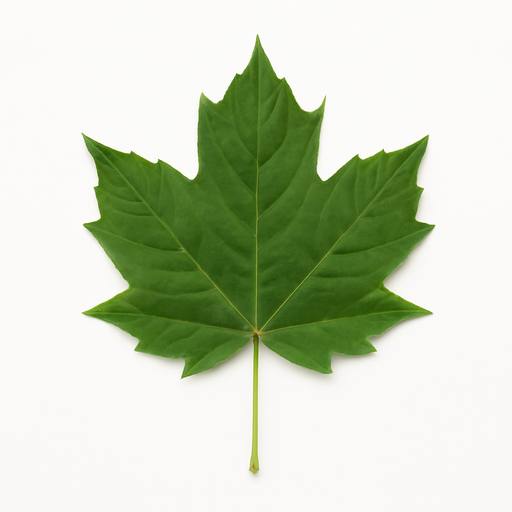

Worked reference comparison: northern red oak or white oak?
Use the named reference photographs on this page or in the oak photo comparison to practice the decision process. This walkthrough compares two known examples; it is not an app identification test.
- Define the candidates: northern red oak (Quercus rubra) and white oak (Quercus alba).
- Inspect intact lobe tips: pointed tips with small bristles support northern red oak in this comparison. Rounded, unbristled tips support white oak. A damaged tip is inconclusive.
- Check another feature: photograph attached acorns and the twig. Northern red oak acorns develop over two growing seasons; white oak acorns mature in one. A single snapshot cannot demonstrate how long a particular acorn took to develop.
- Keep the conclusion narrow: these clues help distinguish the two examples. They do not rule out every other oak. If the region, fruit, or leaf details conflict, keep the identification open.
Trait references: NC State Extension: northern red oak and NC State Extension: white oak. Compare the complete northern red oak profile and white oak profile before naming an unfamiliar tree.
Simple leaf or several leaflets?
Find the bud at the base of the leaf stalk. A compound leaf is made of separate leaflets on one shared stalk; each leaflet is not a separate leaf. Horse-chestnut is a useful example of a hand-shaped compound leaf. Sycamore maple has one continuous blade, even though it has lobes.
Build a small photo checklist
Take one photo of the entire leaf, one close-up of its edge, and one of the twig attachment. Add bark and fruit if you can reach them without damaging the tree. Use an ordinary object for scale and note the region and date. A series of photographs is easier to compare than a tightly cropped fragment.
Test your first guess
Choose two plausible candidates and write down which observed details support each. If a candidate requires opposite leaves but the twig clearly has alternate leaves, revisit it. Distinguish details you saw from details you assumed. This also helps you judge an app identification result.
When to leave the identification open
A damaged leaf, ornamental cultivar, unfamiliar region, or missing twig can leave several candidates. Save the pictures and return for another observation. A name supported by several features is more useful than a confident label based on color alone.
Related species
Compare leaf features
Sources and further reading
Prepared by Tree Leaf Identifier. Updated November 11, 2026. Guides are prepared by the app team; no independent botanical review is claimed.