 Tree Leaf Identifier
Oak Leaf Identification: How to Tell Oak Trees Apart
How can you tell northern red oak and white oak leaves apart?
Northern red oak (Quercus rubra) has pointed, bristle-tipped lobes. White oak (Quercus alba) has rounded lobes without bristles. Check intact tips on several leaves, then compare acorns and location. These traits distinguish the two examples here; other oak species can share them.
References: NC State Extension: northern red oak · NC State Extension: white oak.
Oaks are commonly recognized by lobed leaves and acorns, but species differ in lobe depth, tip shape, and texture. Red oak group leaves often have pointed, bristle-tipped lobes, while many white oak group leaves have rounded lobes.
Check the lobe tips
Pointed, bristle-tipped lobes are a useful clue for many red oak group species. Rounded lobes are common in the white oak group.
Look at the sinuses
The cuts between lobes can be shallow, deep, rounded, or angular. Compare several leaves from the same tree.
Confirm with acorns and place
Acorn form, bark, and where the tree grows make a leaf-based guess much stronger.
Use a photo as a starting point
Capture the front and back of the leaf in natural light, include the leaf stem when possible, and photograph bark, fruit, or buds too. Then compare several features before making a final identification.
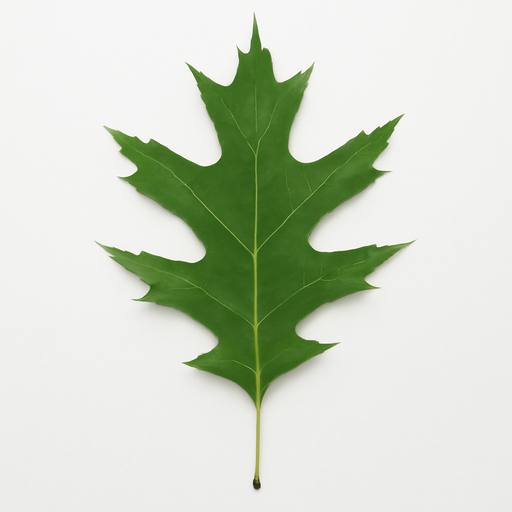

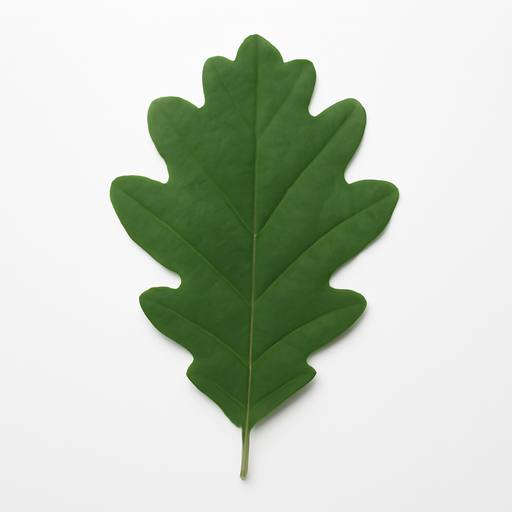

Worked reference comparison: northern red oak or white oak?
Use the named reference photographs on this page or in the oak photo comparison to practice the decision process. This walkthrough compares two known examples; it is not an app identification test.
- Define the candidates: northern red oak (Quercus rubra) and white oak (Quercus alba).
- Inspect intact lobe tips: pointed tips with small bristles support northern red oak in this comparison. Rounded, unbristled tips support white oak. A damaged tip is inconclusive.
- Check another feature: photograph attached acorns and the twig. Northern red oak acorns develop over two growing seasons; white oak acorns mature in one. A single snapshot cannot demonstrate how long a particular acorn took to develop.
- Keep the conclusion narrow: these clues help distinguish the two examples. They do not rule out every other oak. If the region, fruit, or leaf details conflict, keep the identification open.
Trait references: NC State Extension: northern red oak and NC State Extension: white oak. Compare the complete northern red oak profile and white oak profile before naming an unfamiliar tree.
Try a two-species comparison
Use the red oak versus white oak guide below as a worked example. Examine a lobe tip and then look for fruit on the same tree. Keep the genus-level question separate from the species-level question: knowing that a leaf is from an oak does not yet tell you which oak.
Avoid the autumn-color shortcut
A brown, red, or green leaf is not enough to choose the species. Photograph the outline against a plain background and compare the lobe tips while they are still intact. Use multiple leaves so one unusual or damaged example does not dominate your decision.
Record the tree as well as the leaf
Note where you found the tree and whether it was planted in a park or growing in woodland. Save bark and attached acorn photographs alongside the leaf image. These observations make later checks against a regional guide much easier.
Related species
Compare leaf features
Sources and further reading
Prepared by Tree Leaf Identifier. Updated November 11, 2026. Guides are prepared by the app team; no independent botanical review is claimed.