 Tree Leaf Identifier
Northern Red Oak
How do you recognize a northern red oak leaf?
Northern red oak (Quercus rubra) has seven to eleven pointed, bristle-tipped leaf lobes and alternate leaves. Its acorns have a shallow cap and take two growing seasons to mature. Compare several intact leaves with bark and acorns because other red oaks share some leaf traits.
References: NC State Extension: northern red oak.
Quercus rubra
Northern Red Oak is a fast-growing deciduous tree native to North America. It is recognized by its lobed leaves and striking red autumn color. Mature trees can reach 20–30 meters with a broad, rounded crown. Also known as Champion oak, Red oak.
How to identify a Northern Red Oak leaf
Leaves are 12–22 cm long with 7–11 pointed, bristle-tipped lobes and shallow-to-deep sinuses.
Northern red oak leaf: three details to check
Use the numbered photograph as a starting point, then compare a whole, undamaged leaf from your tree. Light and shadow can hide a fine tip, so take a close-up as well as the full outline.
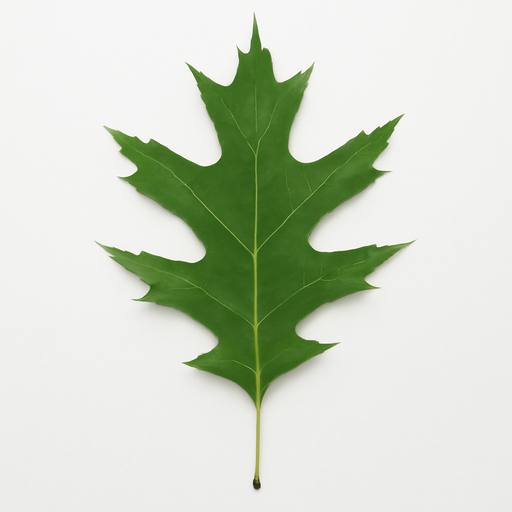
- Lobe tips: look for pointed ends with small bristles.
- Notches: compare the spaces between lobes across several leaves.
- Midrib: follow the central vein to distinguish the outline from overlapping leaves.
Northern red oak bark and buds
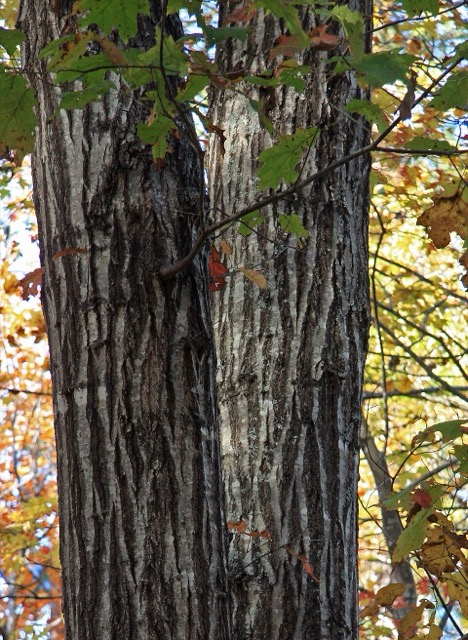
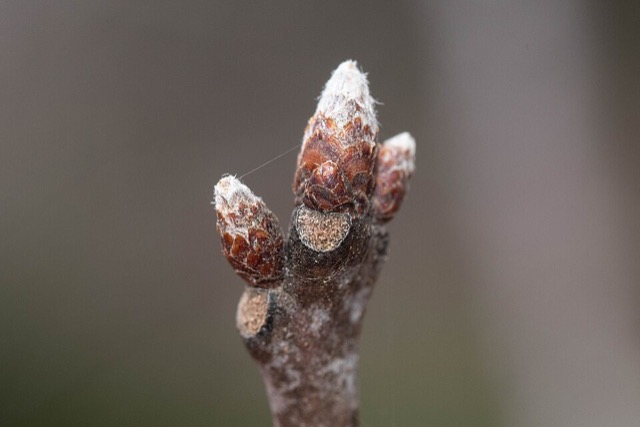
Mature bark develops broad ridges with furrows between them. Buds offer a second detail to photograph in winter. Check both on the same tree as the leaf; a nearby trunk or fallen twig can belong to another species.


Is it northern red oak or white oak?
White oak has rounded lobe tips without bristles. If your leaf has rounded tips, compare it with the white oak profile. Pointed tips alone do not distinguish northern red oak from every other red oak; use the full outline and a local field key to check other candidates.
Compare red oak and white oak photos side by side →
Photographing a possible red oak
Keep the entire leaf and stalk in frame, then photograph both surfaces, one lobe tip, the twig attachment, and any attached fruit. Note the region and whether the tree was planted. Record the details you can see before checking an app result, so the suggested name does not replace your own observations.
Where it grows
Northern Red Oak is native to Eastern and central North America.
Seasonal interest
Green foliage turns red to russet-brown in autumn.
Safety note: Acorns and young leaves may be toxic to some animals if consumed in large quantities.
Can a photo identify this tree?
A photo can provide a useful starting point, especially when the leaf is sharp and well lit. For a reliable identification, compare the result with the leaf edge, lobe pattern, vein structure, bark, buds, fruit, and the tree's location.
Check similar leaves
Compare more than one feature and photograph the twig or attached fruit when possible. Use a regional field guide to check lookalikes.
Related species
Compare leaf features
Sources and further reading
Prepared by Tree Leaf Identifier. Updated October 23, 2026. Guides are prepared by the app team; no independent botanical review is claimed.